Wednesday, 18 February 2009

Birthday

Yesterday Fialta has officially gone a 14 year old teenager.

Only senior members, who know the organisation for some years, remember Fialta's founders. So everyone is sitting quietly listening to great stories.
And watching presentations.

Story of a city (ru)

Fialta's citizens (ru)

The photos are 3 to 14 years old.

Friday, 13 February 2009

Euro<26, mentorship and the market

On Monday I got my special Euro<26 card.


We had a laugh that it is kind of worthless in Belarus, but still Europe remembers and takes care of me.


Then I found this:


http://euro26.by/
Not that bad - I still have 3 places that take the card.

Things are going a bit slow right now, which gives me some time to get used to the city, feel at home, get used to buying food and cooking by myself.

From Minsk - Impressions

Had a first meeting with my mentor and a separate meeting with the EVS project coordinator and Fialta's executive director. I see them every other day, but this time we closely went through my expectations and composed a plan for future doings.
Looks promising.

It's kind of hard to find good vegetables in supermarkets. In open markets on the other hand its a lot better, but... They don't give receipts at the market. It means I can't report to the National Agency about what I bought at the market. We're clarifying the financial report scheme with the Agency, maybe it's not that bad? But for now I collect receipts for every single thing I consume.

Tuesday, 10 February 2009

First work

On Sunday I had first working experience with local youngsters. There's a problem about participant shortage, the same as in Latvia.

We had youngsters from orphanages (for children and young people), who were a very interesting group. In theory I know that a group with developed relationships is hard to work with in the beginning, but it didn't seem that bad.
Meeting

The event was for 3 hours, in which we gave them different tasks and a little competition.

We didn't expect to get much output from them, but nonetheless some of their conclusions were quite interesting.

Friday, 6 February 2009

First impressions from the other side

Well... I'm getting to know Belarus step by step. Can't say that I understand every detail, but already I think I won't get lost.
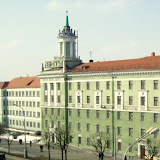
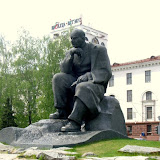
From Minsk - Landmarks


I live in a room in a cottage on the outskirts of Minsk. It's a very good place, though the shower is on the floor and there's a common kitchen. The room itself is big and cosy.
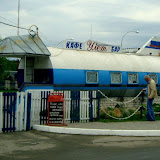
From Minsk - Belrad

From Minsk - Belrad


As I understand there's no such thing as unlimited internet in Belarus. Traffic counts, so I use it from time to time from the office.
From Minsk - People


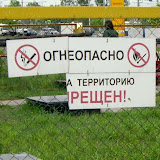
The country has a peculiar feeling about it. Comparing to Riga there's some kind of a spirit of a common ideology. There's lots of social ads in the streets, people address each other respectfully, they use father's names (which in Latvia we don't use at all), there are slogans from the soviet times in the streets.
From Minsk - Landmarks

From Minsk - Landmarks

From Minsk - Landmarks


It may seem strange but the main language in Belarus is russian. Belarussian was pushed away during political processes. And now there's even a whole lot of youngsters born in Belarus who don't speak the language. Which is a shame - it's a very pleasant and interesting language.

I use city transport a lot. There are all kinds of ground transport in Minsk and also two branches of the underground railway (called metro in slavic countries). The transport fees are a lot lower than european or even latvian.

Food costs on the other hand are quite like home, though the price-tags look confusing - 1 lat is around 5000 belarussian roubles, which is about 1.4 euro. So spending 15 000 on groceries is quite ok. Also there are no coins, only paper.

I didn't quite get to my duties yet, but already have some idea of what I can and should be doing. :) We'll see how it turns out.

Friday, 30 January 2009

Insurance

In a few days after handing in the documents for a vis my AXA arrived. An A4 envelope, arrived in 8 days.

It contained:
  • Insurance certificate

  • The card(looks more like a business card than a document), cut in a laminated A4
  • Attachment with translation of the certificate in 23 languages, from which I know only one :)
On the same piece of paper with the card there was a login and password to the system where, probably, will be information about my relations with the insurers. For now I just corrected some personal data. There's also a practical guide available for printing (which I haven't studied yet).

I'm leaving for Minsk on Sunday. When I settle I'll check how the system works in practice.

Visa

On Monday I got my Belarus republic visa.
I needed:
  • Invitation from the organisation
  • Insurance (I didn't have AXA at the moment, so I bought one local, around 20 Ls)
  • Visa questionnaire (available in the embassy, needs a passport photo)
  • 42 Lats
My visa is for 3 months, so I'll need to prolong it at a certain moment.

The Belarus embassy is doing their work somewhat fast and sure. It took 20 minutes to hand in the documents. I got my passport a week later in 5 minutes.

Friday, 19 December 2008

Pre-departure

Pre-departure training course.

What is it about?

A volunteer is a young person going to a country unknown to him/her to do things written on paper. Sounds vague. They say there have been no incidents when volunteers are sold into slavery or are otherwise abused, but still there are things to worry about. Pre-departure training course is meant to give some thoughts on those things.

Who organises it?

In my case it was the Latvian National Agency for the "Youth in Action" program. They're responsible. They say in other countries a sending organisation can organise this training course if it has the resources and experience.
The Agency is having a hard time finding volunteers - there's no common system or database - and because it is first of all needed for the volunteer, he/she should worry about participating in this training course (it's 2-3 days, lots of useful info).

Here's what I found out.

Money

Necessary expenses are covered 100%. Period.

Before departure you should get a visa (not in EU, of course, but I need one - I'm going outside of EU), vaccinations, get prepared (language courses, maybe see a similar to your hosting organisation at work). If the project is neatly written, all this is covered (keep the checks).
Travel expenses are covered 100% (once there and once back).
On arrival (the part I didn't get to yet) depending on agreements with the hosting organisation a volunteer gets food and a place to live. Food and living expenses are covered in the same full amount. The amounts are fixed by countries. Also there's pocket money. They say the old program had quite a nice sum, now it's just enough. Pocket money is also fixed by country - each country its own amount, not more, nor less - and this money is entitled to volunteer's personal needs of any sort, there's no need to report. Also language courses during service time are covered.

Work

Work is work. 35 hours a week if I am not mistaken. There are weekends and holidays + vacation (a month per year). But if the organisation is not working in summer for some reason, it is counted as vacation (e.g. a school).
Actually a volunteer is a full partner of the project, so you can ask to browse the project application and see the real numbers and conditions.

Mentor

Is a person in a hosting organisation who helps to solve issues. It may or may not be the project coordinator, may or may not be the head of the hosting organisation and so on.
With my project I have a special meeting with my mentor scheduled once every 2 weeks.

Insurance

Europe takes care of its volunteers and the European Voluntary Service in "Youth in Action" program is one of the safest forms of volunteering. Because of the insurance. Every year there's about 10 000 volunteers in Europe, all of them insured by AXA. Situated in France AXA's sole and only purpose is insuring volunteers. There's a lot of possibilities foreseen and the conditions are very loyal. And it works all over the world - in every single country of the globe.
Mine is not ready yet. I'll have some details later.

Youthpass

Volunteering is first of all an educational process. And the Youthpass is a document that reflects the results of this process. Every volunteer is entitled one, it is filled in by the volunteer and the mentor.

Crysis

With health it's rather obvious - you have insurance, the hosting organisation provides access to medicalservices in some way.
When it comes to work or conditions of volunteering, you should keed the hierarchy:
The mentor, then hosting organisation's project coordinator, then sending project coordinator, then the Agency (in my case there's no Agency in Belarus, if it gets really bad I'll have to call back home to Latvia).
In other words the earlier crysises and problems are resolved the better for everyone.
Also you should keep in touch with your sending organisation - let them know you're fine.

What next?

All this sounds cool. I know the theory. Having contributed to writing the project also helped. Let's see what happens in practice. Stay tuned.

Now I need to:
  • browse through and sign the activity agreement - a contract which states what I'll be doing
  • get ready - get to know what am I to expect, I guess I know the language and vaccinate

If it would be up to me to write a volunteer's duty list it would definitely have a point "A volunteer's duty is to ask questions".
Be active, ask questions.

Monday, 10 November 2008

Fish in knight's armor.

Some time ago I got news that my EVS project application was approved and I'm going to Belarus, to work in a youth educational centre. For one year. I'll be working with non-formal education, something I believe in, but have little skill with.

Who am I.

My name is Alexander Oleinikov. I'm 22, I was born in Riga, the capital of Latvia. I'm russian and I speak 3 languages freely - Russian, Latvian and English.
At the time of writing this post I have an unfinished bachelor's degree in IT. I play guitar (but can't sing properly), climb rocks, hike and occasionally do something to improve myself.
I eat, drink, don't smoke and really am not much different from any average fellow. :)

How did I get here.

Basically my life's talent is IT. I come from a family with 4 programmers, working in different spheres of the industry. From childhood a computer was my best friend. It was never a problem for me to choose a university - IT faculty of the state university was the only place I applied. And I was among brightest for some time.
But being narrowed to one thing can play a cruel joke on a person.
In some time I found out that people don't just work all their life for money and then die. That was a revelation for me. I met people who do things they like without a salary or a wage, for fun or experience or just because they believe in the result. That's how I got into my favourite non-governmental organization - JASMA.
So I realised that I have little communication skills, practically no knowledge of how to work in a team and many other pathologies peculiarities. And that's where I began to improve myself.
In non-formal education they have a saying that it "ruins your life". From my parents' point of view it's totally true. But I believe people can change and choose what they want to do for a living. Talent isn't everything, and the three c - car, career, comfort - don't make people happy just like that. I decided I want to be one of those figures who open the doors - an educator of NFE, a youth worker. And that is tough - you have to be a person, not just a worker. It gets double-tough when you see that all the things you learned before are useless in new situations. It's always been like that for me to work with non-formal education, but it always felt like it was worth the effort. There's a short tale of a russian writer which I like on the topic (my translation):
The first wave knocks you of your feet,
and you roll, roll, roll,
but not drown - even if you try to drown...
The second wave is waiting for you,
when you try to get on your fours,
and it gets salty in your mouth,
but you're still alive - even if you're ready to die...
The third wave covers you over your head,
and you're thinking: this is the end,
because it really is the end...
But the fourth wave carries you out in the open seas,
and suddenly you remember, that you've always been a fish.

Max Frei

So yeah, it's hard for me, but more and more often I feel like a fish. :)

Three years later we wrote this EVS project for me. I see this as an opportunity to reach what I want, to learn things I will need in the future. So I'm leaving with almost nothing, but will be back a knight in shining armour. ;P

Where will I go from here?

Follow this blog and find out what it is like - to be a volunteer!